Distinguished Academic Experts

Our Adjunct Faculty

Meet Our Adjunct Faculty

-
About:
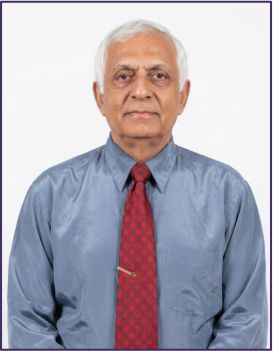
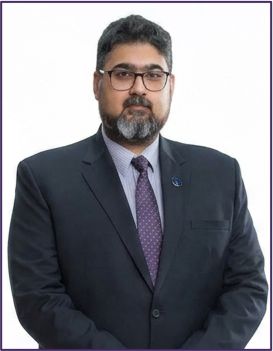
Javed I. Khan
Javed I. Khan is a licensed Forensic Expert, Scientific Assessment Consultant, and author with over 35 years of combined experience in forensic science, toxicology, laboratory management, and regulatory compliance. He holds an M.S. in Biochemistry/Molecular Biology from the University of California Riverside, an M.S. in Biochemistry from the University of Agriculture Faisalabad, and a B.S. from BZ University Multan. Additionally, he is a published author of textbooks and work on forensic science, Islamic law, health, and parenting.
Personal Experience:
Forensic & Scientific Consulting: Serves as a Scientific Assessment Consultant listed with the Attorney Information Exchange Group (AIEG) and a Forensic Consultant for the Utah State Attorney General Office, interpreting analytical reports and providing expert testimony.
Courtroom Testimony: Testified as a licensed Forensic Expert over 500 times across California Federal, State, and local courts, as well as in State of Utah proceedings, representing both defense/prosecution and plaintiff/defendant cases.
Laboratory Leadership & Operations: Former Director of Laboratory Operations at SDXRAY/Alcala Diagnostic Clinical Laboratory (2011–2022). Experienced in founding, operating, and defending laboratories against regulatory closures under standards such as CLIA, CAP, FDA, DEA, and ISO.
State Forensic Science: Served over two decades as a Forensic Scientist with the California Department of Justice, Bureau of Forensic Services (1989–2011).
Academia & Curriculum Development: Former Adjunct Faculty member across several California institutions (1994–2012), developing core curricula and teaching courses in forensic toxicology, biology, and chemistry.
Auditing & Technical Training: Holds lead auditor certifications in ISO-9001, ISO-13485, and ISO/IEC-17025. Experienced in training laboratory staff on standard operating procedures and analytical instrumentation including GCMS, LCMS, HPLC, and ELISA.

-
About:
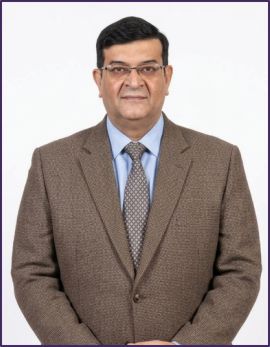
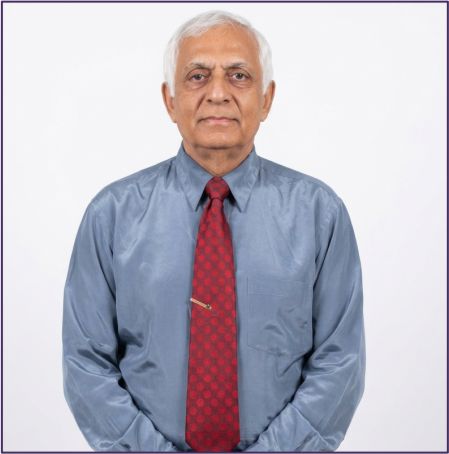
Dr Zia Ullah Khan Dawar
Dr. Zia Ullah Khan Dawar is an internationally experienced public health leader with over three decades of expertise in health systems strengthening, infectious disease control, and large-scale public health programme leadership. He currently serves as Project Director of the Prime Minister’s National Programme for the Elimination of Hepatitis C Infection, Pakistan, leading the country’s efforts toward hepatitis C elimination.
Personal Experience:
Throughout his career, Dr. Dawar has held senior leadership and technical positions in Pakistan’s National MNCH Programme, National AIDS Control Programme (NACP), and National TB Control Programme, contributing to national strategies and large-scale public health interventions.
His international experience includes more than seven years as a Senior Public Health Specialist with the Ministry of Health, Kingdom of Saudi Arabia, where he contributed to public health programme development and implementation. He subsequently served as Global Coordinator/Chief of Party for a USAID-funded health project, providing strategic and programme leadership.
Dr. Dawar has also worked extensively in international technical assistance, programme evaluation, disease control, and health-system strengthening. He served as a Roster Consultant with the Regional Green Light Committee (rGLC) and as a Technical Assistance Consultant with UNOPS and the Stop TB Partnership, participating in international review missions and providing technical support to countries.
His professional portfolio includes key technical and managerial roles with leading national and international organizations and development partners, including Save the Children, USAID, Johns Hopkins University, the Global Fund to Fight AIDS, Tuberculosis and Malaria (GFATM), and WHO.
In addition to his programme and policy leadership, Dr. Dawar has extensive teaching experience, including teaching undergraduate medical students at Aga Khan Medical College and MPH students at the Health Services Academy, Peshawar. He has also completed executive training at the U.S. Centers for Disease Control and Prevention (CDC) and Johns Hopkins University.
He has been recognized for his contribution to public health, including receiving the “Captain of the COVID-19 Team” Award from the Ministry of Health, Kingdom of Saudi Arabia, and being included in the Ministry of Foreign Affairs Honor List of the Government of Pakistan for his distinguished public health services during the COVID-19 epidemic.
-
About:
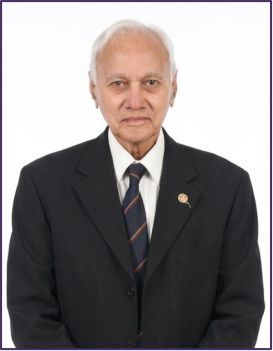
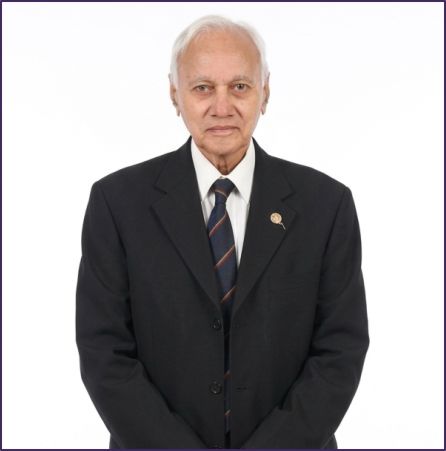
Prof. Dr. Noor Muhammad Butt (N. M. Butt)
Prof. Dr. Noor Muhammad Butt (N. M. Butt), SI, FPAS, is a Pakistani nuclear and solid-state physicist, researcher, and pioneer in nanoscience and technology. Born on June 3, 1936, in Sialkot, he holds a Ph.D. and a D.Sc. in Physics from the University of Birmingham, England. He currently serves as Chairman and Professor at the Preston Institute of Nano Science & Technology (PINSAT), Preston University, Islamabad.
Personal Experience:
Academic & Early Research Background: Graduated top of his class from Murray College (1955) and earned his M.Sc. in Physics from Government College, Punjab University (1957). Served as a Lecturer at Government College, Lahore (1957–1961).
Nuclear Physics & PAEC Career: Joined the Pakistan Atomic Energy Commission (PAEC) in 1961 and dedicated 35 years to the Pakistan Institute of Nuclear Science and Technology (PINSTECH), retiring as its Director-General/Chief Scientist in 1996. He retired from PAEC as its first "Scientist Emeritus" in 2000.
International Collaborations & Academia: Worked as a visiting professor/researcher at the University of Birmingham, University of Oxford, CERN (Switzerland), and the International Center for Theoretical Physics (ICTP, Italy). Established classical experimental proof confirming Waller's theory of phonons using Mössbauer gamma-ray diffraction.
Leadership in Nanoscience & Public Policy: Served as the founding Chairman of the National Commission on Nanoscience and Technology (NCNST, 2003–2008) and Chairman of the Pakistan Science Foundation (PSF, 2008–2010), leading national initiatives to promote nanotechnology awareness and research.
Publications & Honors: Published over 200 research papers, authored textbooks including Waves and Oscillation (1973), and wrote CTBT & Its Implications (1996). Awarded the Sitara-i-Imtiaz (SI), First Joint Winner of the International Khwarizmi Award (1995), ICTP Awards in Nuclear and Solid-State Physics, and is an elected Fellow/Member of the Pakistan Academy of Sciences, Islamic Academy of Sciences, and the World Innovation Foundation.

-
About:
Prof. Dr. Mumtaz Ali Khan
Prof. Dr. Mumtaz Ali Khan is a public health expert, field epidemiologist, and the Principal Scientific Officer/Chief at the Center for Disease Control (CDC) Pakistan, based at the National Institute of Health (NIH) in Islamabad. He has roughly 20 years of professional experience in clinical pediatrics and public health, specializing in infectious disease surveillance, outbreak investigation, and epidemic response.
Personal Experience:
Public Health Leadership: Serves as Senior Scientific Officer at CDC Pakistan, National Focal Person for Infection Prevention & Control (IPC), and Coordinator for the Field Epidemiology and Laboratory Training Program (FELTP) Pakistan.
Epidemiology & Outbreak Response: Has spent over a decade working as a Field Epidemiologist and Training Coordinator at the Field Epidemiology & Disease Surveillance Division, NIH Islamabad, leading response efforts for infectious disease outbreaks.
Global Representation & Research: Represented Pakistan at more than 32 international conferences and presented 28 scientific research papers globally.
International Expert Committees: Serves on global rosters and societies, including the WHO Expert Consultant Roster for Polio/EPI, the Global Outbreak Alert and Response Network (GOARN), the Global Infection Prevention & Control Network (GIPN), the American Society for Microbiology (ASM), and the International Society for Infectious Diseases (ISID). He also chairs the Special Committee on Communicable Diseases at the International Academy of Public Health.
Awards & Fellowships: Recipient of numerous international honors, including the ASM Poster Contest Winner (USA, 2018), EMPHNET Fieldwork Photo Contest Winner (Jordan, 2015), and various prestigious training scholarships across Japan (JICA), China, Malaysia, and the United States.

-
About:
Prof. Dr. Muhammad Salman
Prof. Dr. Muhammad Salman (MBBS, FCPS) is a distinguished medical doctor, pathologist, and the Chief Executive Officer of the National Institutes of Health (NIH) Pakistan. Specializing in pathology and medical microbiology, he is a Fellow of the College of Physicians and Surgeons Pakistan (CPSP) with extensive expertise in public health leadership, disease surveillance, and national health security. As a key figure in Pakistan's public health administration, he has consistently driven technical innovation, biosafety standards, and collaborative disease control initiatives across local and international levels.
Personal Experience:
Executive Leadership: Currently serves as the CEO of the National Institutes of Health (NIH) Pakistan.
Public Health & Laboratory Management: Previously held key leadership roles at the NIH, including Director of the Pakistan Field Epidemiology Training Program and Chief of Public Health Laboratories.
Policy & Framework Development: Played a pivotal role over the last decade in establishing Pakistan’s Integrated Disease Surveillance and Response System (IDSRS) framework, the National Action Plan for Health Security, Antimicrobial Resistance (AMR) surveillance programs, and national biosafety policies.
Certifications & Global Health Security: Holds a WHO Advanced Trainer certification in Biological Risk Management (BRM) and a certification in Global Health Challenges from the University of Washington.
International Representation: Represents Pakistan in high-level international consultations and initiatives focused on global health security.
-
About:
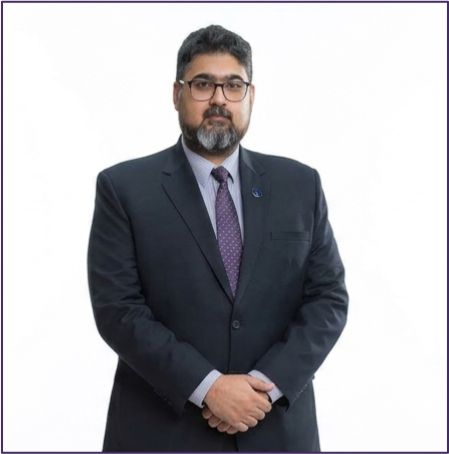
Dr. Usman Hadi
Dr. Usman Hadi, PhD, SFHEA, is an Assistant Professor in Electronic Engineering at Ulster University, Belfast, United Kingdom, where he is affiliated with the Nano Integrated Bio Engineering Centre (NIBEC) and the Centre for Digital Healthcare Technologies (CDHT). Recognized as a Top 2% Researcher by Clarivate (Web of Science), he holds a PhD and MS in Electronic Engineering from the University of Bologna, Italy, and a BS in Electrical Engineering from PIEAS, Pakistan. His research spans 5G/6G wireless communication, AI applications in digital healthcare and drones, optical communication, and IoT hardware security.
Personal Experience:
Academic & Research Appointments: Assistant Professor at Ulster University (2021–Present), following postdoctoral research roles at Aalborg University, Denmark (2019–2021) and the University of Bologna, Italy (2019).
Research Leadership & Grants: Serves as Principal Investigator and Co-Investigator on major research grants—including EPSRC (£782k+), Invest NI (£96k), Innovate UK (£102k), and Garfield Weston Trust (£421k+)—focusing on AI-driven drones, climate action, hardware security, and advanced instrumentation.
Publications & Scholarly Impact: Authored over 105 Scopus-indexed journal articles accumulating more than 5,500 citations (H-index = 29). Recipient of the Best PhD Dissertation Award (2019) and multiple IEEE Best Paper Awards.
Standardization & Professional Service: Serves as a 3GPP delegate for the International Telecommunication Union (5G+ Release 17 to present), member of the AI Working Group at Ulster University, and Editor for journals including IEEE Access, IEEE Signal Processing Magazine, and Photonics.
Teaching & Mentorship: Senior Fellow of the Higher Education Academy (SFHEA). Coordinates undergraduate and postgraduate mechatronics, cybersecurity, and engineering project modules, and supervises multiple PhD researchers supported by Vice Chancellor and Department for the Economy studentships.